
AI
RAG Security Mistakes: 7 Errors to Prevent Data Leaks
Most RAG failures stem from indexing unstructured data without sanitization, allowing attackers to extract sensitive information through indirect prompts.
Most RAG failures stem from indexing unstructured data without sanitization, allowing attackers to extract sensitive information through indirect prompts.

Device encryption alone fails if backup keys remain accessible on compromised endpoints or shared cloud storage accounts.

Attackers rewrite invoice details to route funds to accounts they control, exploiting the trust you place in established business relationships.

Passive observation reveals hidden patterns in data flow that active scanning misses, allowing you to distinguish normal operations from malicious activity without altering system behavior.

Parental controls do not inspect content; they match traffic against static lists and block connections before the browser can render the page.

Remote code execution allows attackers to run commands on your servers, turning a single vulnerability into full system control without user interaction.

Forensic integrity often fails not during the breach, but during the initial collection when volatile memory is overwritten by standard restart procedures.

Container escape occurs when an attacker bypasses isolation boundaries to access the host kernel, turning a confined process into a privileged system administrator.

Built-in privacy controls reduce background data collection, but they cannot stop apps from inferring sensitive traits through behavioral patterns and usage timing.

Email aliases decouple your primary address from online services, allowing you to revoke access to specific sites without changing your main account credentials.

Securing autonomous agents prevents tool misuse but cannot guarantee correct reasoning, creating a paradox where safety mechanisms may block valid operational workflows.

Resource usage spikes often mask themselves as normal workload variance, requiring baseline comparison to reveal unauthorized mining processes hiding in plain sight.

Small teams reduce risk by treating security as a code quality metric rather than a separate compliance phase, avoiding expensive audits.

Bulletins describe technical flaws, not immediate threats, and treating them as urgent alerts creates noise that hides genuine risks in your infrastructure.

Metadata services often expose credentials without network access, making local code execution the primary attack vector rather than external network scanning.

Migrating to post-quantum algorithms often fails because engineers ignore the massive size increase of cryptographic keys and signatures.

These programs operate in the shadows, consuming resources and opening backdoors that standard security tools often ignore by design.

Most cloud recovery plans fail because they assume network access and permissions survive the outage, leaving critical systems unreachable when needed most.

Autonomous agents introduce hidden state vulnerabilities that traditional application security frameworks fail to detect or mitigate effectively.
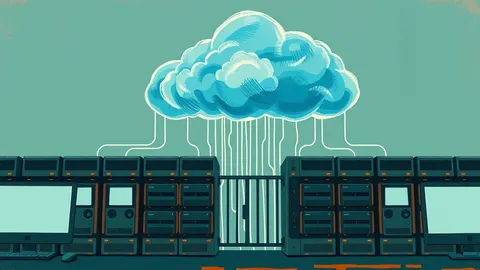
Most SaaS leaks occur through authorized integrations that behave normally, making them invisible to standard perimeter defenses and traditional audit logs.

Compliance requires more than age gates; it demands a fundamental redesign of data collection architectures to prevent tracking before consent occurs.

Fileless malware hides in system memory and legitimate processes, making traditional signature-based detection ineffective until performance degrades or behavior shifts.

Most cloud breaches fail because teams patch the code before isolating the compromised credentials, allowing attackers to persist through secondary access tokens.

Open networks remove the barrier between you and strangers, allowing anyone nearby to read your unencrypted traffic without your knowledge or consent.