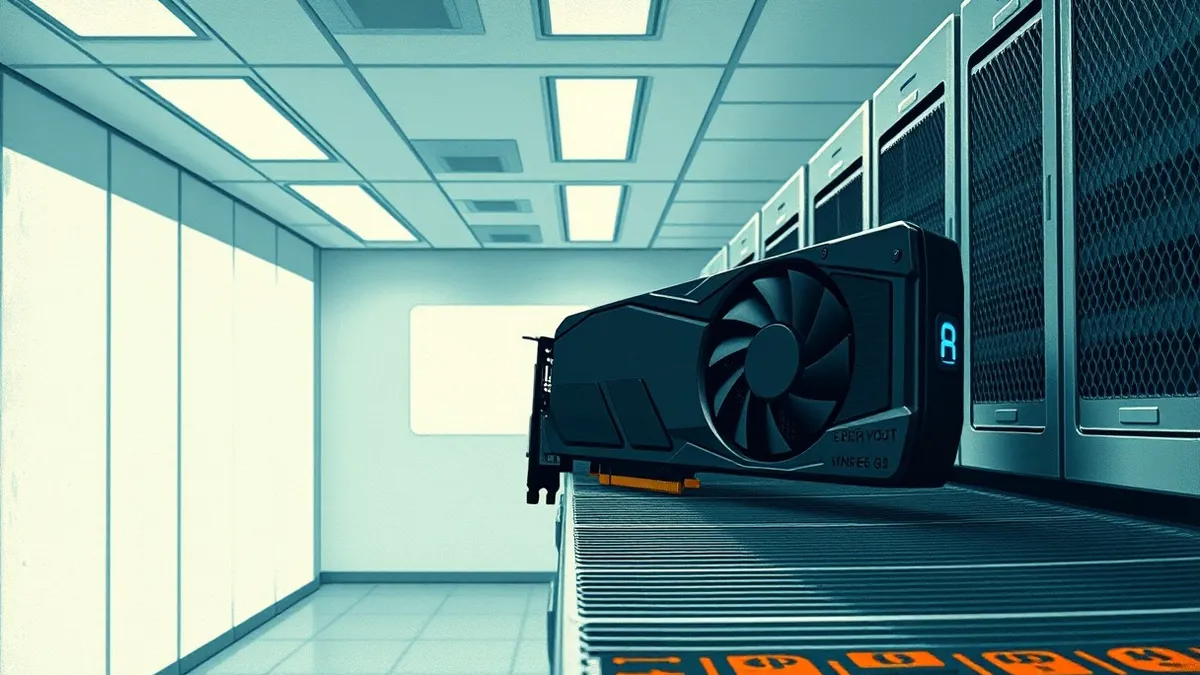
H100 GPU Rentals Hold Steady as Falling AI Token Costs Spark Jevons Paradox
Data from August 2026 shows H100 rental prices remain stable despite cheaper tokens, creating a risky dependency on continuous demand growth.
Key points
- H100 GPU rental prices hold steady or climb even as AI token prices drop.
- Cheaper tokens drive higher usage volumes, offsetting lower per-unit costs.
- The hardware supply chain risks significant losses if AI demand growth flattens.
Market data from August 2026 reveals a persistent Jevons paradox in the artificial intelligence sector, according to The Decoder. While the cost of individual AI tokens continues to decline, rental prices for NVIDIA H100 GPUs remain stable or increase. This dynamic suggests that falling costs are stimulating greater demand rather than reducing overall spending on compute resources.
The risk
The current market structure relies on the assumption that AI usage will grow rapidly enough to counteract falling token prices. As long as volume increases faster than costs decrease, hardware remains scarce and expensive. If demand growth slows or flattens, the entire supply chain from chip manufacturers to cloud providers could face immediate financial pressure.
Who is exposed
Chip makers, memory suppliers, energy providers, and cloud companies are all exposed to this volatility. The Decoder notes that the system is fragile; if the chain of demand breaks, these entities take a direct hit. Markets are already sensitive, as evidenced by stock drops following reports of lower-than-expected annualized revenue from OpenAI.
Cost and compliance
The financial risk stems from the disconnect between unit costs and total volume. Agentic AI systems consume tokens at a staggering rate, potentially inflating compute demand artificially. It remains unclear how much of this demand comes from human users versus automated systems, making future cost projections difficult for infrastructure providers.
What should you do?
Managers should monitor GPU rental costs and token usage rates closely to identify early signs of demand flattening. Organizations relying on heavy AI compute should diversify their infrastructure providers to mitigate supply chain risks associated with concentrated hardware demand.
What to do and how to stay safe: NVIDIA
- Track the ratio of token cost reductions to GPU rental price changes to identify market shifts.
- Review internal AI agent configurations to ensure they are not generating excessive, non-essential token consumption.
- Diversify cloud infrastructure providers to reduce dependency on single-source hardware availability.
- Monitor public market reactions to AI revenue reports for early indicators of sector-wide demand changes.
Step-by-step guide: AI Governance Explained: Building Rules for Autonomous Systems
General security guidance from the Vector Tribune newsroom. It is not confirmed advice from the organisations named in this story.
Frequently asked questions
What is the Jevons paradox in the context of AI hardware?
It is a phenomenon where falling costs of AI tokens drive increased usage, keeping demand for expensive hardware like H100 GPUs high despite lower per-unit prices.
Which hardware is affected by this pricing dynamic?
NVIDIA H100 GPUs are specifically cited, with rental prices holding steady or climbing even as the cost of AI tokens decreases.
What happens if AI demand growth slows down?
If demand flattens, the entire supply chain including chip makers, memory suppliers, and cloud providers could suffer significant financial losses.