Privacy Laws for Small Businesses: How to Comply Without a Legal Team
Compliance is not a one-time setup but a continuous mapping of data flow, where the cost of inaction often exceeds the cost of implementation.
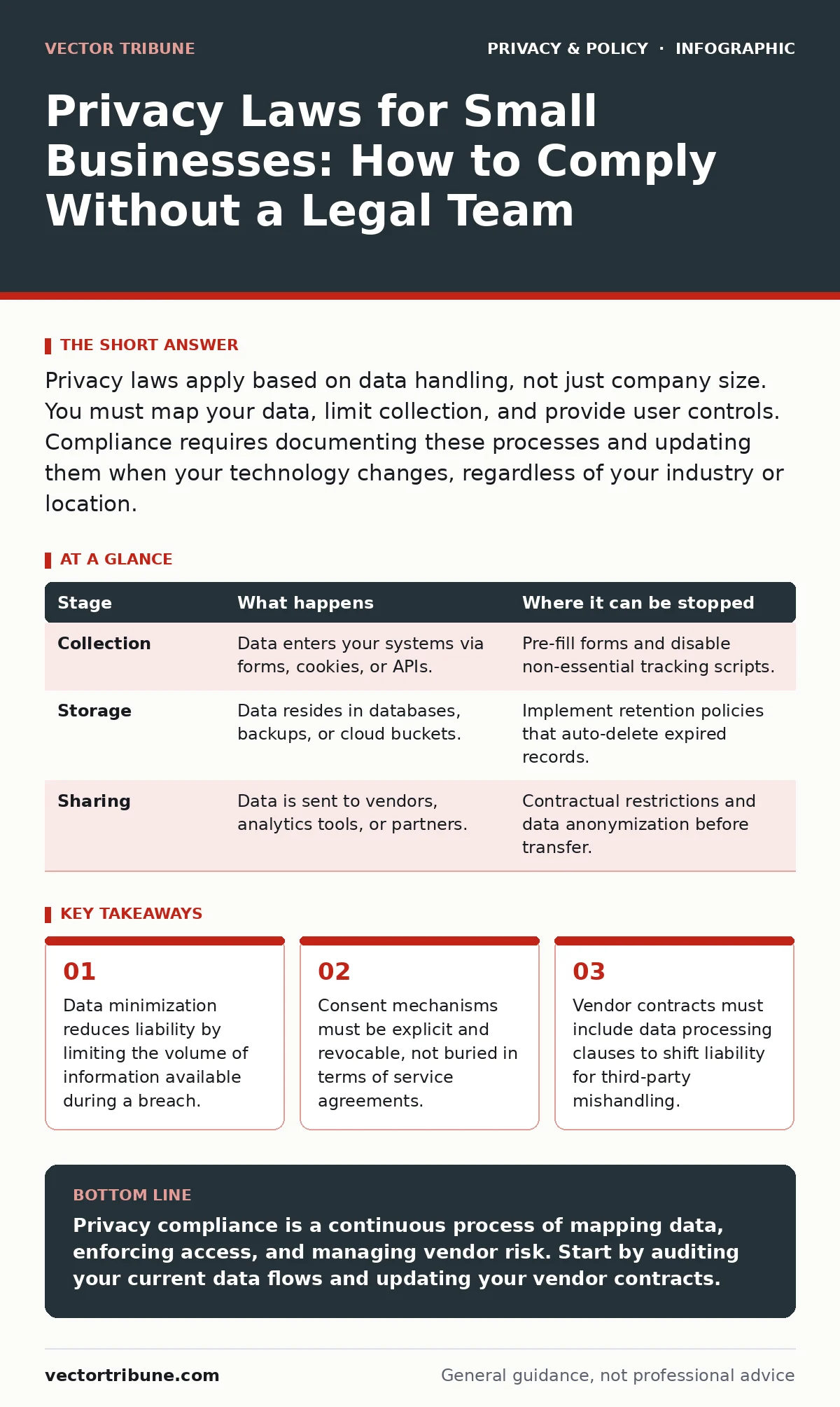
Privacy laws apply based on data handling, not just company size. You must map your data, limit collection, and provide user controls. Compliance requires documenting these processes and updating them when your technology changes, regardless of your industry or location.
The Threshold of Applicability
Privacy regulations do not always distinguish between large corporations and small entities. The trigger is often the nature of the data handled or the geography of the users served. If you collect personal information, you fall under specific statutory requirements. This applies even if you operate locally, as digital services cross borders effortlessly.
Many small operators assume they are exempt because they lack a dedicated legal department. This assumption is dangerous. Laws like the California Consumer Privacy Act or the European General Data Protection Regulation apply based on revenue thresholds or user volume. Once you cross those lines, the rules are identical to those facing global tech giants.
You must determine if your business processes sensitive data. This includes health records, financial details, or precise location tracking. Even non-sensitive data, such as email addresses or IP logs, can become sensitive when aggregated. Understanding this distinction is the first step in compliance.
Stage 1: Data Inventory and Mapping
You cannot protect what you cannot see. The first operational step is creating a complete inventory of all personal data you collect. This goes beyond obvious fields like names and emails. It includes metadata, device identifiers, and interaction logs.
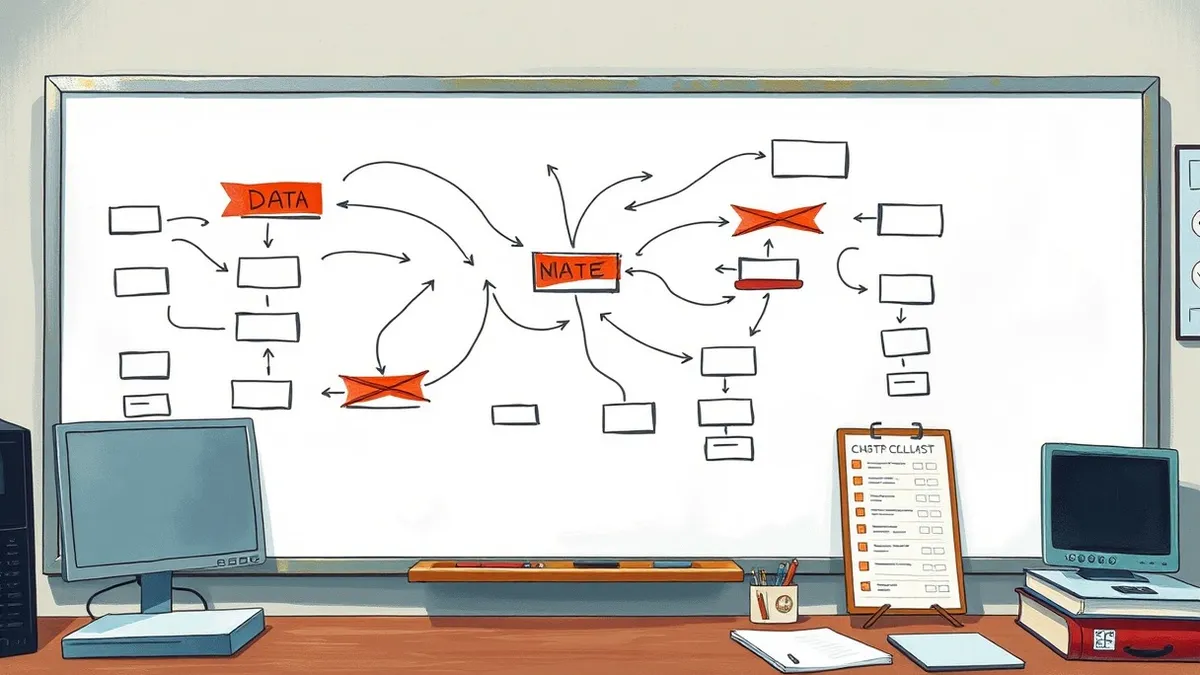
Map the flow of this data from collection to deletion. Identify every system, database, and third-party service that touches this information. This mapping reveals hidden accumulation points where data persists longer than necessary.
| Stage | What happens | Where it can be stopped |
|---|---|---|
| Collection | Data enters your systems via forms, cookies, or APIs. | Pre-fill forms and disable non-essential tracking scripts. |
| Storage | Data resides in databases, backups, or cloud buckets. | Implement retention policies that auto-delete expired records. |
| Sharing | Data is sent to vendors, analytics tools, or partners. | Contractual restrictions and data anonymization before transfer. |
This stage often reveals that you are collecting data you do not use. This unused data is pure liability. Removing it reduces your attack surface and simplifies future compliance audits.
Stage 2: Legal Basis and Consent
For each data point, you must define a legal basis for processing. Consent is one basis, but it is not the only one. Contractual necessity allows you to process data required to fulfill a service. Legitimate interest applies when processing is necessary for business operations and does not override user rights.
Consent must be specific, informed, and freely given. Pre-checked boxes do not count. Users must actively opt in. They must also be able to withdraw consent as easily as they gave it. This requires technical implementation, not just legal text.
This structure ensures that you are not relying on ambiguous permissions. It also provides a clear audit trail. If a regulator asks why you processed data, you can point to the specific consent record.
Stage 3: Technical Safeguards and Access Control
Legal compliance requires technical enforcement. You must implement measures to protect data confidentiality and integrity. Encryption at rest and in transit is the standard mechanism. This renders data unreadable without the correct keys.
Access controls ensure that only authorized personnel can view sensitive data. Role-based access control limits visibility based on job function. A marketing employee should not see payment details. This principle of least privilege reduces the risk of insider threats.
You must also log access to sensitive data. These logs provide evidence of proper handling. They also help detect anomalies. If a user account accesses data outside normal patterns, the system should flag it. This is not about surveillance; it is about accountability.
Stage 4: User Rights and Data Portability
Privacy laws grant users specific rights over their data. They can request access, correction, deletion, or portability. Your systems must be able to fulfill these requests efficiently. Manual processes are slow and error-prone. Automation is preferable.
Data portability requires exporting data in a machine-readable format. This allows users to move their information to another service. You must not hinder this process. It promotes competition and user autonomy.
Deletion requests are complex. You must delete data from primary systems and backups. However, legal obligations may require retaining certain records for tax or safety reasons. You must document these exceptions clearly.
Imagine a user requests deletion of their account. Your system must scrub their profile, email history, and analytics data. It must also notify third-party vendors to do the same. This coordination requires robust vendor management.
Stage 5: Vendor Management and Third Parties
You remain liable for data you share with vendors. If a vendor suffers a breach, you may be held responsible. Therefore, you must vet vendors before engaging them. Review their security practices and privacy policies.
Contracts must include data processing agreements. These clauses define responsibilities, security standards, and breach notification timelines. They ensure that vendors treat your data with the same care as you do.
Regular audits of vendor compliance are necessary. Do not assume that a vendor’s certification is permanent. Security postures change. Stay informed about their updates. This proactive approach prevents surprises.
Stage 6: Incident Response and Notification
Breaches happen. Your response determines the outcome. Have an incident response plan ready. It should outline steps for containment, investigation, and notification. Speed is critical. Delayed notification can worsen legal penalties.
Notify affected users and regulators within the timeframe required by law. Be transparent about what happened and what you are doing to fix it. Honesty builds trust, even in difficult situations.
Review the incident to identify root causes. Update your safeguards to prevent recurrence. This continuous improvement cycle is the core of privacy compliance. It shows regulators that you are serious about protection.
Integrating Privacy into Development
Privacy is not a afterthought. It must be integrated into your development lifecycle. This approach, known as privacy by design, ensures that data protection is built into your products from the start.
Consider privacy implications during the design phase. Ask how each feature affects user privacy. Minimize data collection at the source. This reduces complexity and risk later.
Refer to our guide on mobile app permission abuse to understand how excessive permissions erode trust. Similarly, review browser cookies to manage tracking transparency. These technical details matter. They form the foundation of user confidence.
Key takeaways
- Data minimization reduces liability by limiting the volume of information available during a breach.
- Consent mechanisms must be explicit and revocable, not buried in terms of service agreements.
- Vendor contracts must include data processing clauses to shift liability for third-party mishandling.
Privacy compliance is a continuous process of mapping data, enforcing access, and managing vendor risk. Start by auditing your current data flows and updating your vendor contracts.
Frequently asked questions
Do I need a privacy officer for a small team?
Not necessarily, but someone must be accountable for data protection. This role can be part of a larger job description.
How long should I keep user data?
Only as long as necessary for the purpose collected. Define retention periods for each data type and automate deletion.
What if a user refuses consent?
You must not process their data for that purpose. Alternative services should be available where possible.
Does encryption alone satisfy legal requirements?
No. Encryption is a technical control. You still need legal bases, user rights handling, and incident response plans.
How this guide was produced: written by the Vector Tribune editorial team with AI assistance, checked against the public references listed below, and reviewed when the facts change. See our editorial policy or report an error.