$787M Q3 Net Income Plummets 43% As Tesla Begins Optimus Robot Manufacturing
Tesla started manufacturing its humanoid robot while heavy spending on AI and autonomous driving cut third-quarter net income by 43% year-over-year.
Key points
- Tesla began production of Optimus robots at its Fremont, California facility.
- Third-quarter net income fell to $787 million, a 43% drop from the prior year.
- Operating expenses rose 39% to $4.78 billion, driven by AI and robot development.
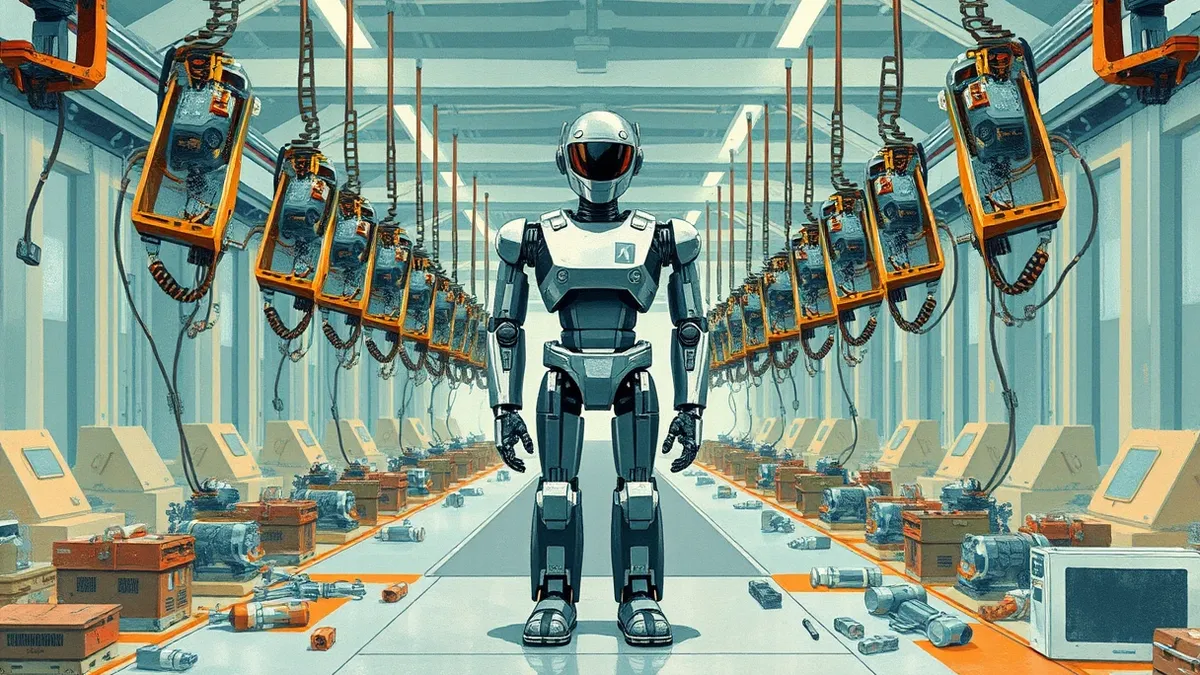
Tesla has started manufacturing its Optimus humanoid robot at its Fremont, California factory, a site previously used for electric vehicle assembly. The company announced this milestone alongside third-quarter earnings that showed a sharp decline in profitability due to heavy investment in artificial intelligence and autonomous driving technologies.
The risk
The primary financial risk is the significant divergence between flat revenue and skyrocketing expenses. Tesla’s total revenue remained essentially unchanged at approximately $28 billion, while operating costs surged. This imbalance resulted in a 43% drop in net income, falling to $787 million from $1.37 billion in the same period last year, according to The Next Web.
Who is exposed
Investors and stakeholders are exposed to the volatility of Tesla’s transition from a pure automotive manufacturer to a robotics and AI company. The company delivered 486,532 vehicles in the quarter, a slight increase from the previous quarter but fewer than the same period last year. Automotive revenue slipped 3% to $20.56 billion, while energy storage revenue fell 16% to $2.88 billion, partly due to tariff-related refunds.
Cost and compliance
Operating expenses rose 39% to $4.78 billion, with research and development accounting for $2.76 billion of that total. Capital spending more than doubled to $4.73 billion. Chief Financial Officer Vaibhav Taneja stated that spending would continue to rise until new products reach the market, projecting about $20 billion in capital spending for the year. The company also recorded a $142 million paper loss on SpaceX shares, partially offset by a $290 million gain on Bitcoin holdings.
What should you do?
Monitor Tesla’s quarterly updates for changes in capital expenditure trends as the company scales its robotics and AI initiatives. Track the timeline for the commercial release of Optimus and Cybercab services, as these products are central to the company’s future revenue model.
The background in plain language
When companies pivot to new technologies, they often face a period where spending outpaces revenue. This is common in industries like robotics and artificial intelligence, where initial investments in research, development, and manufacturing infrastructure are substantial. Teams usually evaluate whether current cash reserves can sustain these high costs until new products generate sufficient sales. It is important to distinguish between operational losses from growth investments and structural financial weaknesses.
What to do and how to stay safe: Tesla
- Review the company’s capital spending projections to understand the duration of the investment phase.
- Monitor the growth of the services segment, which includes software subscriptions, as it provides higher-margin revenue.
- Watch for updates on regulatory credit income, which can significantly impact net profit figures.
- Assess the impact of external factors like tariffs on the energy storage business segment.
Step-by-step guide: AI Governance Explained: Building Rules for Autonomous Systems
General security guidance from the Vector Tribune newsroom. It is not confirmed advice from the organisations named in this story.
Frequently asked questions
When does Tesla plan to release its Cybercab and unsupervised self-driving features?
Executives stated they aim to deliver Cybercabs to customers by the end of this year and expect unsupervised self-driving for customer cars around the second quarter of 2027.
Why did Tesla’s energy storage revenue decline?
The solar and energy storage business saw a 16% year-over-year drop to $2.8 billion, which Tesla attributed to tariff-related customer refunds.
What is Tesla’s current cash position?
Tesla’s cash and investments rose to $45.4 billion, and the company secured the ability to borrow up to $30 billion, though it does not plan to draw on those funds this year.